Episode 05 of our podcast series is now live.
Created to mark 50 years of Scarborough Group International, the series explores the people, partnerships and defining moments that have shaped the business over the past five decades.
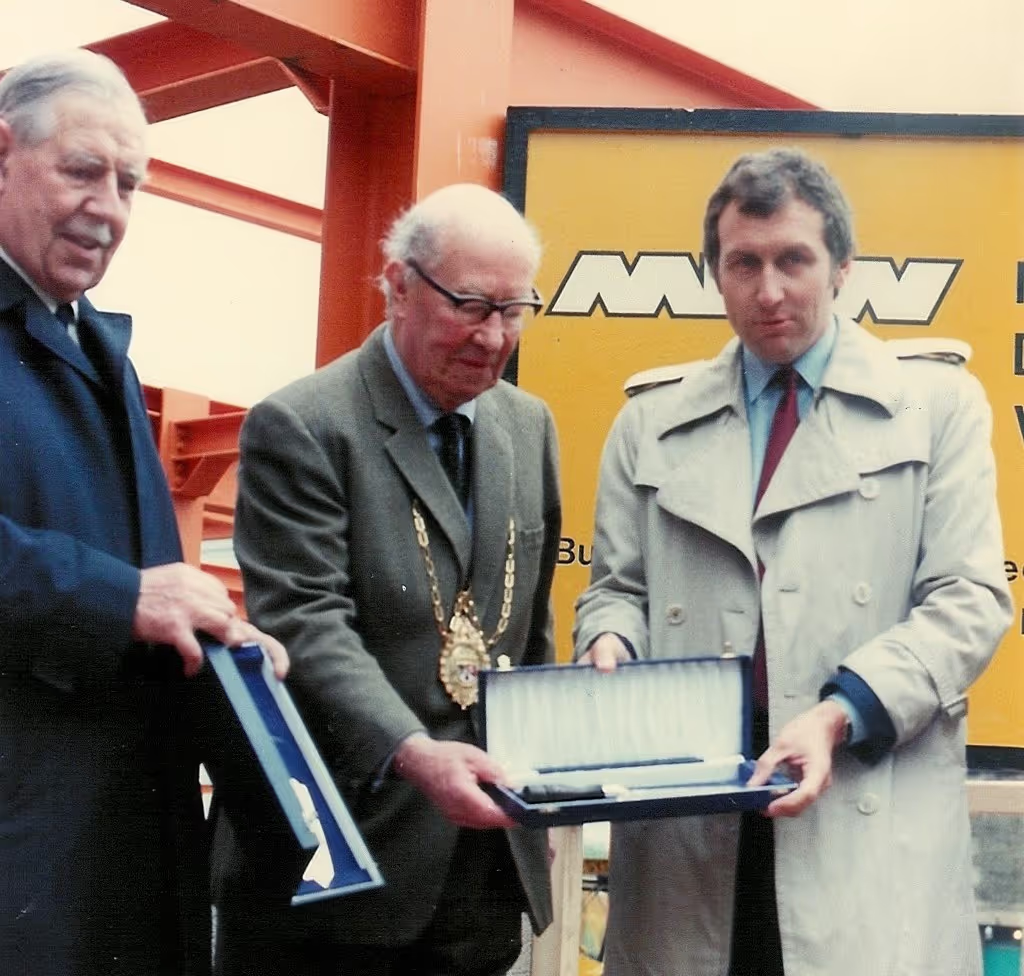
Hosted by three-time World Squash Champion Nick Matthew OBE, this episode features Kevin McCabe, Simon McCabe and Ezra Nahome, CEO of Lambert Smith Hampton, as they examine how the real estate industry has evolved and what it takes to succeed in an increasingly complex market.
The conversation explores the value of long-standing relationships, adapting to changing market conditions, embracing innovation and technology, and why the most successful businesses are prepared to make decisions before the path ahead is completely clear.
Drawing on decades of experience across commercial property, they share candid reflections on leadership, resilience and the importance of maintaining a long-term perspective while continuing to evolve with the market.
Explore the series and watch Episode 05.
🎧 Spotify https://open.spotify.com/episode/5jzfQObHMFkQXXZGJWOaLA?si=SpVzjlINTH2iaAPF_yqaeg
🎬 YouTube https://youtu.be/QcmlrMphtmI

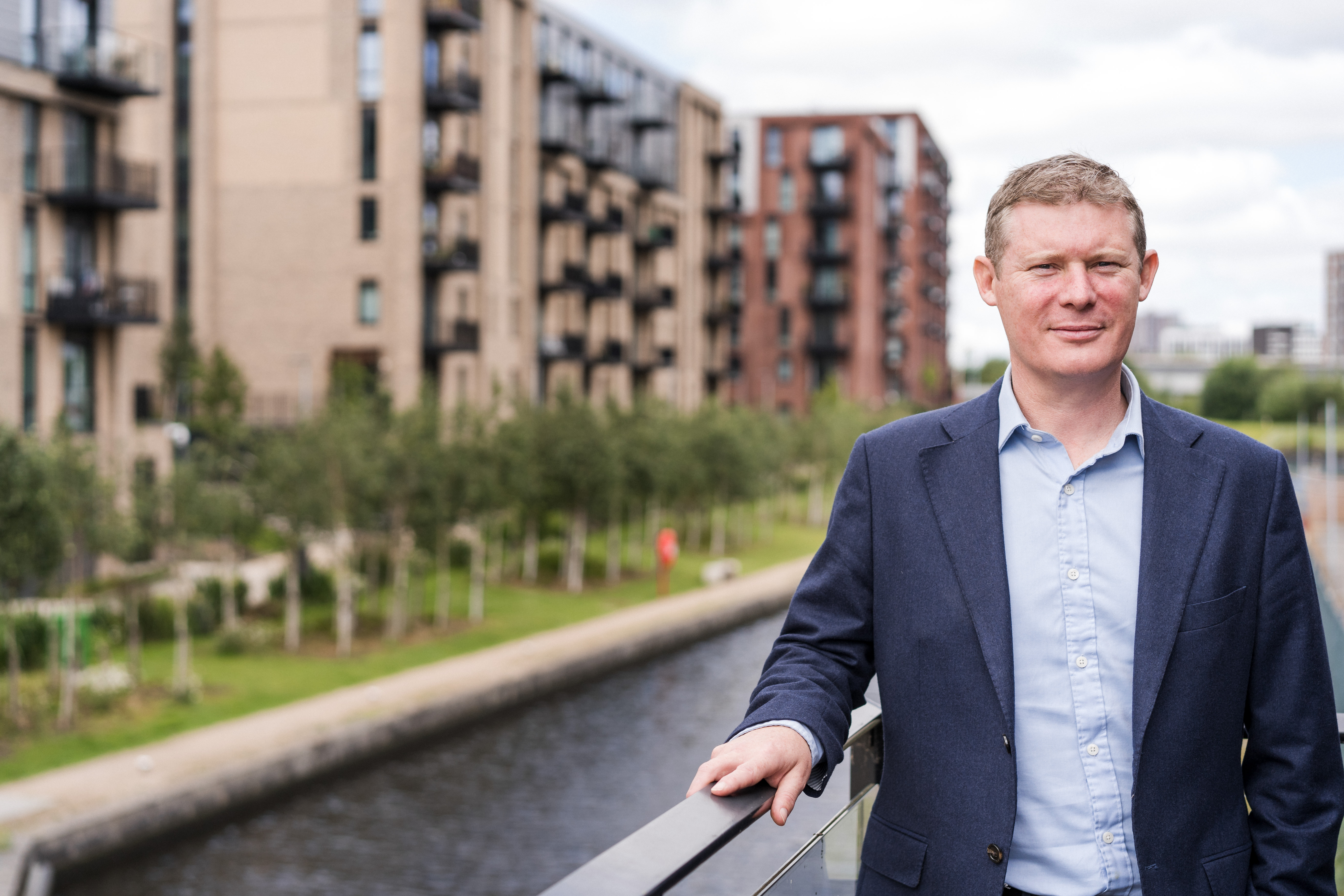
By Paul Kelly, Group Managing Director, Scarborough Group International
The UK property industry has never been short of ambition. Every conference, every policy paper and every government announcement reinforces the importance of delivering more homes, regenerating our towns and cities and attracting private investment into places that need it most. The intention is there, the demand certainly exists and there is no shortage of institutional capital looking for opportunities in the Living sector.
Yet despite all of that, the gap between housing need and housing delivery remains stubbornly wide.
That tells us something important. The challenge facing the industry today is no longer convincing people that we need more homes or attracting investors into residential property. It is creating projects that are capable of moving from aspiration to delivery in an environment that has become significantly more complex than it was even five years ago.
Construction costs have risen sharply, while the Building Safety Act has introduced a more rigorous regulatory framework that rightly places greater emphasis on accountability and demonstrating compliance throughout the design and delivery process. It has also added time, cost and complexity to bringing forward residential development. Infrastructure costs continue to increase, planning and utility connections often take longer than anticipated, and procurement has become more challenging. None of these changes are inherently negative. They are helping to raise standards across the industry. Collectively, however, they have made the delivery of major regeneration projects significantly more complex and, in doing so, have changed what investors look for when assessing delivery risk.
Increasingly, investment committees are asking questions that extend well beyond planning consent and projected returns. They want to understand whether the infrastructure is deliverable, whether there is genuine public sector commitment, whether the delivery team has navigated projects of comparable complexity before and whether the partnership around the table has the resilience to see a project through changing market conditions.
In other words, confidence has become one of the most valuable assets a scheme can offer.
Residential remains one of the most attractive long term investment sectors in the UK. Demographic trends continue to support demand, particularly in cities with strong employment growth, expanding knowledge economies and a growing population. Manchester is perhaps the clearest example of that. Its ability to attract businesses, graduates and investment has been well documented, while independent research continues to highlight the city's long term economic strength and the resilience of its rental market.
What has changed is not the attractiveness of residential as an asset class. It is the way projects are assessed.
There was a time when securing planning permission was seen as the principal milestone. Once consent had been achieved, the assumption was often that delivery would naturally follow. Today's market is rather different. Investors recognise that planning is only one stage in what has become a far more complex process, and increasingly they are looking for evidence that the difficult work has already begun.
That means understanding how infrastructure will be funded, how viability will be maintained, whether enabling works are progressing, how public bodies are supporting delivery and whether the people behind the project have demonstrated the patience and experience needed to navigate inevitable challenges over what may be a decade or more.
The market has not become more cautious. It has become more discerning, and that distinction matters because it changes where value is created.
One of the biggest lessons we have learned over the past decade is that successful regeneration has very little to do with one organisation getting everything its own way. Quite the opposite. The most successful projects are usually those where every partner understands that achieving the best outcome requires compromise, trust and a shared commitment to the long term.
Public private partnerships have often been spoken about as though they are simply another delivery mechanism or funding structure. In reality, they are much more fundamental than that. They create alignment between organisations with different responsibilities but a common objective, allowing decisions to be made with confidence even when market conditions become more challenging.
That has certainly been our experience working alongside Salford City Council and the National Housing Bank, Homes England, at our Middlewood Locks scheme.
Over more than a decade, we have worked together through changing governments, different economic cycles, rising construction costs and an evolving regulatory landscape. There have been difficult decisions, robust conversations and occasions where plans have needed to adapt to changing circumstances, but the partnership has remained focused on the same objective of creating a successful neighbourhood that delivers long term value for residents, businesses and the city.
That continuity is far more valuable than it perhaps appears from the outside. It creates certainty, not because challenges disappear, but because everyone involved is committed to solving them together.
National Housing Bank, Homes England, has changed the conversation
One organisation that deserves particular recognition is the National Housing Bank, Homes England.
Throughout our experience, Homes England has consistently demonstrated what effective public sector partnership should look like. It understands commercial realities, recognises that regeneration rarely follows a straight line and is focused on helping projects move forward rather than simply administering funding programmes. That practical approach has made a real difference, particularly at a time when many schemes across the country have struggled to maintain momentum.
The creation of the National Housing Bank builds on that philosophy. It recognises that increasing housing delivery requires more than planning reform or ambitious targets. Infrastructure, enabling works and patient capital all have an equally important role to play in creating the confidence that allows long term private investment to follow.
From our perspective, that is an important evolution in the way government supports regeneration. It reflects an understanding that successful development depends not simply on policy, but on partnership.
When we first became involved at Middlewood Locks, the opportunity was obvious. A strategically important brownfield site sitting between Manchester and Salford had the potential to become one of the North West's most significant new neighbourhoods. Realising that vision, however, required far more than a masterplan and planning permission.
It required sustained investment in infrastructure, long term collaboration between the public and private sectors and a willingness to continue investing through changing market conditions. It also required recognising that regeneration is measured over decades rather than development cycles.
Today, Middlewood Locks is home to more than 2,600 residents, with over 1,300 homes delivered alongside commercial space, public realm and new connections that have transformed the way this part of the city functions. Those outcomes are important, but they are not the achievement in themselves.
The real achievement is that the partnership has continued to deliver despite operating through one of the most challenging periods the industry has experienced in recent memory.
The continued support of the National Housing Bank, Homes England, is another important step in that journey, demonstrating confidence in a wider partnership that includes Salford City Council and has consistently delivered over the long term.
There will always be debate about planning reform, viability, regulation and housing targets. Those discussions are important because they shape the environment in which we all operate. However, they should not distract us from a much simpler truth.
Successful regeneration has always been built on relationships.
The projects that will attract long term investment over the next decade are unlikely to be those with the boldest visions or the most ambitious computer generated images. They will be the schemes that demonstrate they can deliver, that have earned the confidence of their public sector partners and that continue to create value long after the first phase has completed.
As a family owned business in our 50th anniversary year, we have always believed that our reputation is built over generations rather than market cycles. That naturally influences the way we think about development. We are interested in creating places that continue to evolve, attract investment and support thriving communities long after construction has finished because those are the places that ultimately deliver the strongest long term returns.
Looking back over the past ten years, perhaps the biggest lesson Middlewood Locks has taught us is that regeneration is no longer simply about assembling land, securing planning and finding funding. Those things remain important, but they are no longer enough on their own.
The projects that succeed will be those where public bodies, private developers and long term investors work together with a shared commitment to delivery, recognising that confidence is earned over many years and that successful partnerships create value that no organisation could achieve alone.
That, in my view, is what modern regeneration looks like, and why partnership has become one of the most valuable forms of capital our industry has.

The next major phase of development at Middlewood Locks, our multi-award-winning £1 billion mixed-use regeneration neighbourhood in Salford, is set to begin following approved funding from The National Housing Bank.
Alongside out joint venture partners, Metro Holdings, we have a well-established partnership with Homes England, the parent organisation of the National Housing Bank, which has previously provided funding for earlier phases of development, all since fully repaid. Including the latest provision of funding, a total of £84.2m has now been loaned in support of the various phases of Middlewood Locks contributing to the delivery of more than 1,300 completed new homes and accelerating delivery of up to 909 further new homes.
This funding package will facilitate further development on 10 acres of land adjacent to Manchester City Centre, strengthening the link between the prospering neighbourhood near Salford Central station, St. John's, and Manchester’s Spinningfields business district.
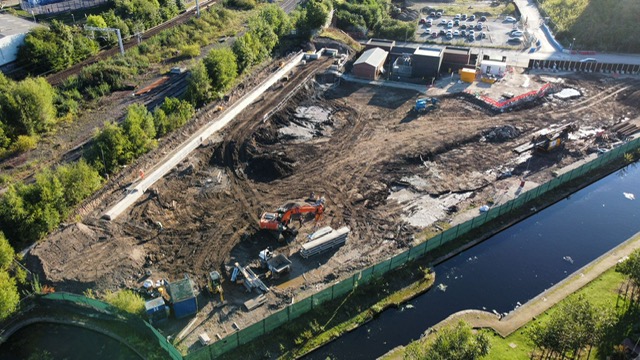
Celebrating its 10th anniversary and a decade of ongoing development, Middlewood Locks has transformed a formerly disused brownfield site encompassing the three large basins of the Manchester, Bolton & Bury Canals, significantly enhancing the waterways and rejuvenating the Ordsall Chord railway infrastructure.
Middlewood Locks is now home to over 2,600 residents across 1,306 homes, complemented by retail and leisure amenities and an expansive public realm. The development has received both national and regional recognition for its positive social impact and for facilitating connectivity between Salford and Manchester, offering secure and pleasant walking and cycling routes between the two cities.
The new funding will be utilised for site preparation and enabling works intended to expedite the delivery of up to 909 additional homes at Middlewood Locks. This includes comprehensive design work to support the planning application for 'Gateway 2,' which proposes 909 new homes across two further phases of residential 'Brick Fields Yard' and 'Lockgate Wharf,' with ground floor commercial and amenity space.
Brick Fields Yard is set to comprise 659 apartments in one, two, and three-bedroom configurations, including duplex homes, all positioned around a private raised podium garden exclusively accessible to residents. The development features two separate buildings of 27 and 32 stories, offering high-quality accommodation with access to fantastic resident amenity spaces and offering world class accommodation.
Lockgate Wharf will feature an additional 250 luxurious canalside residential homes, comprising a mix of one, two and three-bedroom apartments, centred around a private residents’ raised podium garden and situated beside a ½ acre public park. Lockgate Wharf is adjacent to the lock connecting the Manchester, Bolton& Bury Canal with the River Irwell.
Paul Kelly, Managing Director at Scarborough Group International, said,
“We are delighted to extend our long-standing and very successful collaboration with Homes England as one of the first pilot schemes since the launch of the National Housing Bank in March. This funding arrangement marks a significant milestone in realising the full potential for Middlewood Locks as an important driver in creating sustainable new communities and much-needed new homes.
“We have already delivered a thriving new neighbourhood that we are extremely proud of, and look forward to the next ten years of investment that delivers on the National Housing Bank, Homes England housing agenda with measurable sustainable value. We hope to be able to start on site by early next year, with the first phase of homes available for occupation in 2030.
The National Housing Bank is a new public finance institution to speed up the creation of housing and communities, as well as support the revitalisation of towns and cities throughout England. Established by the UK government, it collaborates with house builders, developers, investors, and registered providers to provide up to £16 billion in debt, equity, and guarantees. The bank also works with [Regional] Mayors through Homes England’s regional framework to enhance partnership efforts. As a subsidiary of Homes England, the bank draws on the Agency’s expertise to help deliver over 500,000 homes and numerous major regeneration and mixed-use projects, expected to unlock more than £53 billion in private investment over the coming decade.
Nigel Barclay, Director – Loans, National Housing Bank, said:
“The initial three phases of Middlewood Locks have been highly effective in delivering essential new homes, revitalising previously unused land and strengthening the connection between Salford and Manchester city centre.
“The significant positive impact on the local area is clear, and this latest funding accelerates further housing delivery within this vibrant neighbourhood.
“Urban regeneration projects such as Middlewood Locks play avital role in supporting new development in towns and cities, fostering communities where individuals are eager to live and engage socially. We continually seek collaboration with partners who share these goals and ambitions.”
The tenth anniversary of Middlewood Locks coincides with Scarborough Group International's own 50th anniversary, marking significant milestones for both the development and the company behind it. Over the past five decades, SGI has established itself as one of the UK’s leading regeneration and placemaking specialists, delivering transformative projects that unlock the potential of underused urban land and create long-term economic and social value.

Our acquisition of Leeds' Old Medical School has been shortlisted for Property Deal of the Year at the Insider Yorkshire Property Awards 2026.
The category recognises transactions that have the potential to make a lasting impact on Yorkshire's property sector, and we're pleased to see the Old Medical School recognised alongside some of the region's most significant deals.
The acquisition marks the first phase of the Leeds I nnovation Village and reflects a shared ambition to establish Leeds as one of the UK's leading destinations for healthtech innovation.
Rather than seeking a conventional purchaser, Leeds Teaching Hospitals NHS Trust was looking for a partner capable of taking forward its long-term ambitions for the Old Medical School. We're proud to have been selected and look forward to continuing our work with the Trust, alongside Leeds City Council, West Yorkshire Combined Authority, Nexus and Leeds Beckett University, alongside our design team partners, as plans for the building progress.
Through HiVE Places, we'll bring forward proposals to repurpose the Grade II* listed building as a dedicated home for healthtech businesses, creating space for collaboration between entrepreneurs, researchers, clinicians and industry at the heart of one of the UK's strongest healthcare and academic ecosystems.
The winners of the Insider Yorkshire Property Awards will be announced in September.

The third annual canal-side festival at Middlewood Locks inSalford returns next month with an action-packed schedule for all ages.
The free community event is part of a programme to celebratethe 10th anniversary of Middlewood Locks along with Salford’s centenary. Takingplace on Saturday 4th July from 3pm to 10pm, Middlewood Locks Fest offers alively, family-friendly free event including live music, colourful parades,children’s workshops, a makers market, water activities street food vendors anda fabulous light and fire display as night falls bringing the event to a close.
Attendees can expect activities throughout the day and intothe evening, providing entertainment and community spirit for residents andvisitors alike. A key highlight thisyear is the Wagon Train – a pop-up mobile festival commissioned by Salford CityCouncil as part of the Salford centenary celebrations and produced by Walk thePlank, featuring free, family-friendly entertainment including music, poetry,play space, karaoke, and talent competitions.
Live entertainment is set to include a high energy paradefrom Batala Afro-Brazilian percussion act playing samba-reggae rhythms. The internationallyacclaimed recording artist Oojami will also take centre stage with a DJ setblending traditional Turkish and Eastern melodies with modern urban beats, drumand base, dub, and English vocals.
Indie-folk duo, Honest Michael will perform music with amixture of humour and heart drawing inspiration from love and nature, whilst Salford’svery own Barton Belles community choir will deliver a cappella and choralrepertoire of pop, Motown, jazz and folk.
The makers market will be back bringing together localmakers, artisans, performers and creators selling a range of beautiful productssuch as jewellery, plants, artwork, clothes and produce.
The event will offer plentiful food and drink options fromlocal vendors alongside fun activities such as facepainting, hook-a-duck andarts and crafts.
On-the-water fun includes rafted canoe trips and aspectacular sunset light and fire installation with the ‘Spark Drummers’ bringingproceedings to a lively end at 10pm.
The festival is being made possible through sponsorship fromScarborough Group International, the developer and custodian of MiddlewoodLocks, Joint venture partners Metro Holdings PLC, and Get Living, thebuild-to-rent operator. Produced in collaboration with the outdoor eventsproduction team at Walk the Plank, the event is also supported by Manchester,Bolton & Bury Canal Society and Canal & River Trust, with funding fromGMCA.
Nicola Wallis, Group Sales & Marketing Director atScarborough Group International (SGI), said,
“We are delighted to be hosting our third annual MiddlewoodLocks Fest next month, which also coincides with our 10th anniversary. We are also thrilled to play a key part in thewider Salford centenary celebrations, which have been taking place across thecity.
“Middlewood Locks Fest has become a very popular event forthe local community, with an inclusive programme of events which caters foreveryone. It is great to see peoplecoming together and enjoying the neighbourhood that we have carefully curatedas a thriving destination as well as a place to live.
“With over 2,600 people now living at Middlewood Locks thereis a wonderful sense of community and place where outdoor activities are reallysupported by the beautiful waterside setting, curated green spaces and engagingnew public realm.”
Bethany Skeels at Get Living, said,
“Middlewood Locks Fest is a brilliant example of the energyand community spirit that make this neighbourhood so special. We’re pleased tobe supporting the festival once again and helping to create a day that bringsresidents, visitors and local businesses together to enjoy the canal-sidesetting, celebrate Salford’s creativity and make the most of everythingMiddlewood Locks has to offer.”
Paul Hindle of Manchester, Bolton & Bury Canal Society,said,
“The canal has always been part of Salford’s story, and itis exciting to see it becoming a place people can enjoy in new ways today. Byopening up the waterside for leisure, activity and shared experiences,Middlewood Locks Fest helps reconnect the community with this important pieceof local heritage.”
Ben Turner at Walk the Plank, said,
“This year, we’re bringing even more life to the canal with abigger event programme which invites people of all ages to get involved. Aftersuch a fantastic response last year, we wanted to build on that momentum andcreate another joyful, creative celebration for the whole community.”
Railings show apartment virtual tour:
https://my.matterport.com/show/?m=d9JDQgVRvHg
Middlewood Locks Instagram: Middlewood Locks @middlewoodlocks
Middlewood Locks website: www.middlewood-locks.co.uk
Episode 04 of our podcast series is now live.
Created to mark 50 years of Scarborough Group International, the series explores the people, partnerships and defining moments that have shaped the business over the past five decades.
Hosted by three-time World Squash Champion Nick Matthew OBE, this episode features Nicola Wallace of Scarborough Group International and Kurt Partington from Salford City Council, who reflect on the success of Middlewood Locks as the development marks its 10-year anniversary.
Together, they explore the partnership that has driven one of the UK's most significant regeneration projects, discussing the importance of trust, shared ambition and open communication in delivering long-term success. The conversation also examines how strong public-private partnerships create lasting communities, overcome challenges and continue to evolve overtime.
Explore the series and watch Episode 04.
🎧 Spotify https://open.spotify.com/episode/6OSBtcIam4qVy8TeACYy6E?si=56337a1bd6ff4739
🎬 YouTube https://youtu.be/z0GOgqCKsrs

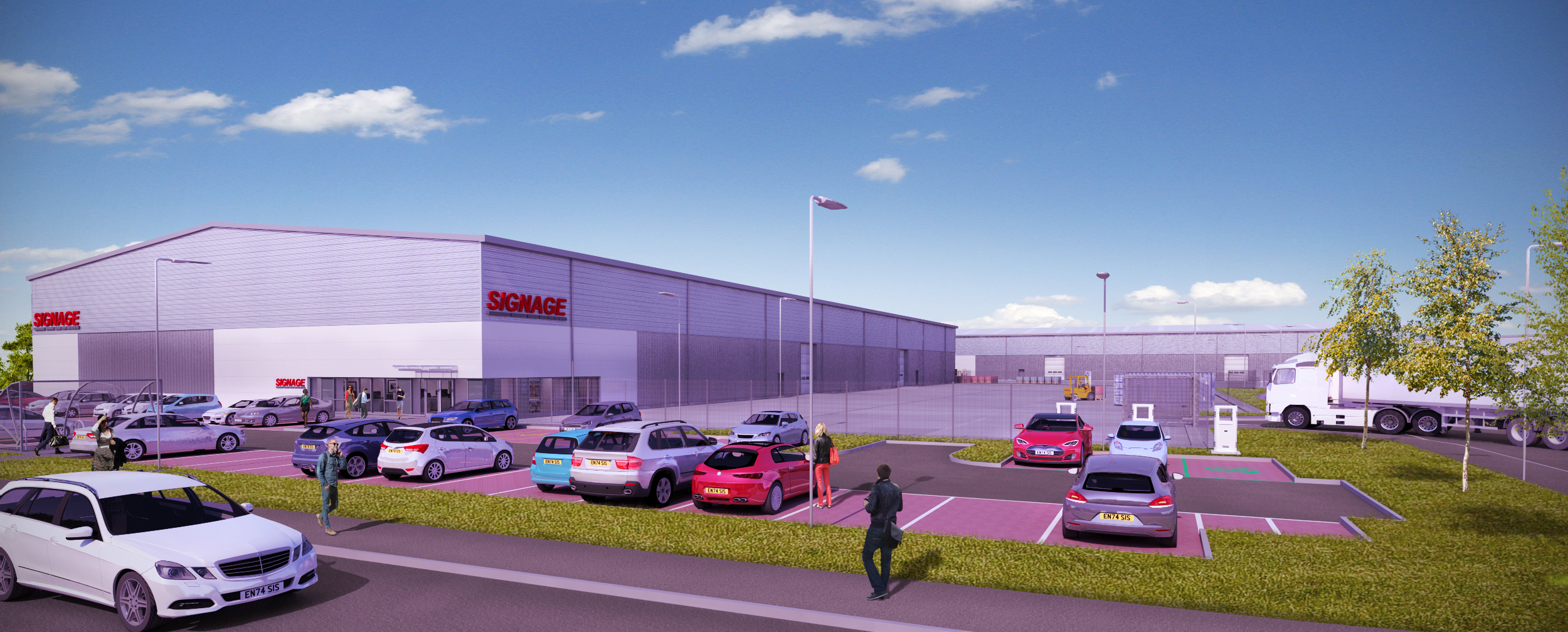
Plans for Integral, our major new logistics and advanced manufacturing development at Thorpe Park Leeds, have taken a significant step forward after Leeds City Council's East Plans Panel resolved to approve the scheme, subject to the completion of a Section 106 legal agreement.
The decision marks an important milestone in the continued evolution of Thorpe Park Leeds and brings us closer to delivering 60 acres of high-quality employment space that will strengthen the region's position as a hub for logistics, advanced manufacturing and innovation.
The outline planning application will now progress to completion of the Section 106 legal agreement, after which the formal planning decision notice will be issued.
Integral will be capable of providing up to 596,500 sq ft of high-specification industrial, logistics and advanced manufacturing space capable of accommodating a range of different business from regional to national occupiers. Designed to meet increasing demand for high-quality employment space, the development has the potential to support around 1,700 new jobs, driving economic growth and attracting forward-thinking businesses to the region.
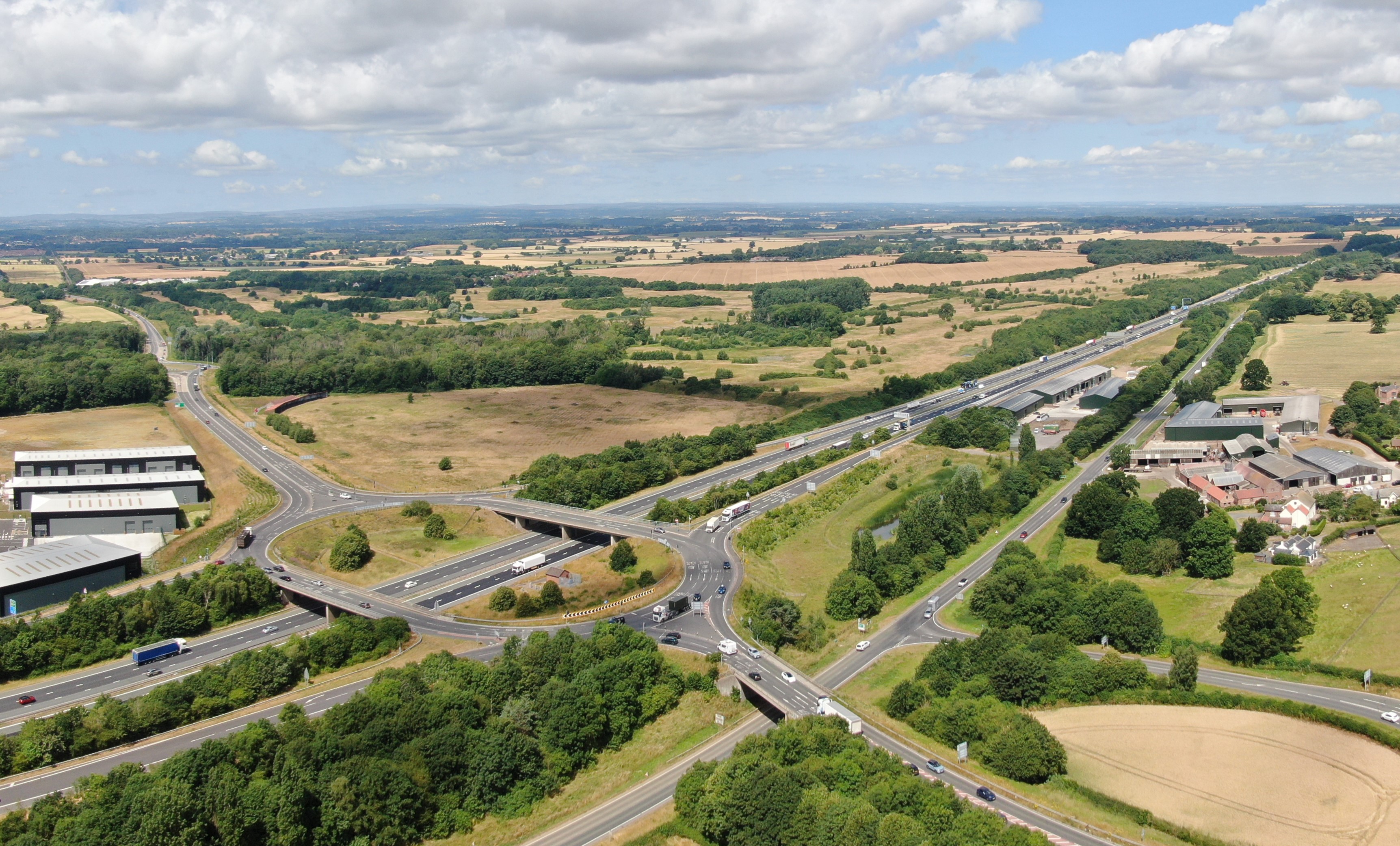
Situated on Brown Moor, adjacent to the award-winning Thorpe Park Leeds and The Springs retail and leisure destination, Integral boasts excellent transport links. With direct access to the M1 motorway and eventually the TransPennine railway line, as well as benefiting from key infrastructure such as the East Leeds Orbital Route(ELOR) and Manston Lane Link Road (MLLR), the scheme offers seamless connectivity for businesses looking for well-connected, high-quality industrial facilities.
Integral has been designed with both sustainability and employee wellbeing at its core. 42% of the site will be retained as green space, preserving existing woodland and hedgerows and introducing new landscaped areas to enhance biodiversity. These natural features will create a healthier environment for businesses while reinforcing SGI’s commitment to long-term environmental stewardship. The development will also provide pedestrian and cycle-friendly routes, improving connectivity and encouraging active, low-carbon commuting.
From an energy efficiency perspective, Integral has been designed to deliver highly sustainable industrial and manufacturing space. The scheme’s high-performance design will help occupiers reduce operational costs, lower carbon footprints and enhance long-term environmental performance.
By seamlessly integrating with the existing amenities at Thorpe Park Leeds and The Springs, Integral also aims to cultivate a connected and thriving business environment, enhancing employee wellbeing and productivity through easy access to retail, leisure and wellness facilities.
Adam Varley, Development Director at SGI, said:
“We are delighted that Leeds City Council's East Plans Panel has resolved to approve plans for Integral, subject to the completion of the Section 106 legal agreement. This is a truly game-changing development that will further strengthen Thorpe Park Leeds as the leading business hub in the region. This project is a key milestone in our long-term vision for the wider estate, bringing new employment opportunities and reinforcing the area's economic significance.
“With the logistics and advanced manufacturing sectors rapidly expanding, Integral provides the perfect environment for businesses seeking high-quality, sustainable space with outstanding connectivity. The scheme has been designed with sustainability at its core to set a new benchmark for modern industrial development.”
For more information, visit www.integralleeds.co.uk.

HiVE Places, the innovation platform launched by Scarborough Group International to create and operate next-generation innovation environments across the UK, has signed three landmark Memoranda of Understanding (MoUs) with Leeds Teaching Hospitals NHS Trust (LTHT), Nexus at the University of Leeds and Leeds Beckett University, marking one of the most significant collaborations for health innovation ever established in Yorkshire.
The agreements formalise a shared commitment to transform the Grade II* listed Old Medical School at Leeds General Infirmary into a world-class healthtech innovation hub. Bringing together the NHS, academia and industry, the partnership reflects the internationally recognised Triple Helix approach to innovation, creating a collaborative environment designed to accelerate research, investment and real-world impact across healthcare.
The Old Medical School is one of HiVE Places' founding projects and will serve as a flagship example of how the platform brings together places, partnerships and innovation ecosystems to accelerate healthtech innovation and economic growth. The aim is to create an active, open community where clinicians, researchers, entrepreneurs and businesses can work side-by-side to develop, test and scale new health technologies.
Each organisation will play a key role in delivering that vision. LTHT will anchor the project from the clinical side, embedding its Innovation Pop Up and providing companies with direct access to NHS expertise, patient insight and live testing environments. Nexus, part of the University of Leeds, will connect occupiers with the University's research base, specialist facilities and entrepreneurial programmes, helping innovators move from early-stage ideas to market-ready solutions. Leeds Beckett University will bring its strengths in applied research, health, wellbeing and digital innovation, helping create a pipeline of talent and collaboration opportunities. HiVE Places will lead the redevelopment and long-term stewardship of the building, curating an ecosystem that connects occupiers with the networks, mentorship and investment required to scale.
The result will be a connected environment where clinicians, researchers, entrepreneurs and investors can develop, test and commercialise new technologies that improve patient care while driving economic growth. The recently launched Health Innovation Leeds Incubator will provide businesses with access to integrated support, research expertise, clinical validation and real-world testing opportunities within one of the UK's most dynamic health innovation communities.
Located at the heart of Leeds city centre, the development benefits from a uniquely connected innovation infrastructure where world-class universities, one of the UK's largest teaching hospitals and cutting-edge research facilities sit side by side. The healthtech innovation hub will form the centrepiece of the Leeds Innovation Village, one of four neighbourhoods within the £2 billion Leeds Innovation Arc. Backed by the £160 million West Yorkshire Investment Zone, the Arc is the city's most ambitious regeneration and innovation programme in a generation, linking universities, hospitals and businesses through new infrastructure and shared purpose.
The Old Medical School is the first major project within the Village to move forward, marking a tangible step from vision to delivery and setting the pace for the wider Arc.
Deb Hetherington, COO at HiVE Places, said:
“Our vision for the Old Medical School has always been about more than restoring a historic building, it's about creating a genuine engine for innovation. These partnerships turn that ambition into something tangible, connecting academia, the NHS and industry in a way that gives real structure and momentum to the region's health innovation ecosystem.
“I'm incredibly grateful to our partners at Leeds Teaching Hospitals, Nexus at the University of Leeds and Leeds Beckett University for their openness, energy and shared belief in what we're building together. Following completion of the acquisition of the Old Medical School, we're now focused on working closely with our partners and stakeholders to keep things moving at pace as we progress through the next stages of planning, funding and delivery.”
The redevelopment of the Old Medical School will not only safeguard an important heritage building but also create the physical and cultural heart of a fast-growing regional ecosystem. West Yorkshire's healthtech sector already contributes more than £3 billion a year to the regional economy and supports over 16,000 jobs. With the healthtech innovation hub as its focal point, Leeds is set to strengthen its position as the UK's most connected health innovation ecosystem, drawing national and international investment and building on its reputation as a location where start-ups, scale-ups and global firms thrive side by side.
The signing of the MoUs marks a decisive step towards delivery. With these partnerships now formalised, HiVE Places and its partners are focused on maintaining momentum and progressing the project through planning and funding milestones later this year, ensuring progress continues at pace as Leeds' Innovation Village takes shape.
Dr Chris Herbert, Director of Operations – Research andInnovation, Leeds Teaching Hospitals NHS Trust, commented:
“This is an exciting step forwards and further demonstrates thepowerful partnerships we have here in Leeds. This MOU builds on the recentlylaunched Health Innovation Leeds Incubator which is aimed at acceleratinggrowth of businesses across West Yorkshire so that our patients and populationcan benefit from world-class health innovations developed in the region. Italso builds upon HiVE Places' acquisition of the Old Medical School as theTrust's Innovation Pop Up will become the first anchor tenant. This will enablethe Trust to extend the Innovation Pop Up and create additional capacity at itsspace at Leeds General Infirmary.”
Professor Silke Machold, Pro-Vice Chancellor Research andInnovation at Leeds Beckett University, said:
“We pride ourselves on being a trusted partner within our city andregion. As an Anchor institution, our research and innovation are deliveredthrough co-creation driving impact for the people, communities, andorganisations we serve. This collaboration highlights this in action. We lookforward to working together to drive innovation, grow our regional economy,develop our workforce of today and tomorrow and importantly try to make apositive difference to people's lives.”
Gareth Scargill, Director of Nexus at the University of Leeds,added:
“We're incredibly excited to be partnering on this landmarkproject. By bringing our communities together under one shared vision, evenmore businesses will be able to access the world-class health innovationexpertise at Nexus and across the University of Leeds. This collaborationstrengthens the support available to innovators at every stage of theirjourney, helping them scale faster, make real-world impact, and contribute to athriving healthtech ecosystem for the region.”
Councillor James Lewis, leader of Leeds City Council said:
“Leeds is one of the top three global locations for healthtech companies, so bringing together these core Leeds anchor institutions with HiVE Places is a fantastic step forward. This partnership further reinforces our leading role in national and global health innovation. We're proud to besetting the pace and shaping the future as a city where breakthroughs are born, ideas are tested at speed, and where bold partnerships turn research into reality.”
Tracy Brabin, Mayor of West Yorkshire, said:
“West Yorkshire is a global leader in health technology, and thispartnership is a shining example of how we're driving innovation throughcollaboration.
“By uniting world-leading clinicians with our outstandinguniversities and pioneering businesses, we're creating a powerhouse of newideas that will transform patient care.
“This collaboration will be a catalyst in our mission to combathealth inequalities and improve lives, as we work to create a brighter,healthier future for everyone across our region.”
Image caption (L-R): Dr Chris Herbert, Director of Operations - Research and Innovation, Leeds Teaching Hospitals NHS Trust; Mark Jackson, CEO HiVE Places; Deb Hetherington, COO HiVE Places; Natalie Allen, Head of Business Partnerships, Leeds Beckett University; Gareth Scargill, Director of Nexus at the University of Leeds.
Episode 03 of our podcast series is now live.
Created to mark 50 years of Scarborough Group International, the series explores the people, partnerships and defining moments that have shaped the business over the past five decades.
Hosted by three-time World Squash Champion Nick Matthew OBE, this episode sees Kevin McCabe, Simon McCabe and former Sheffield United manager Dave Bassett reflect on the role sport has played in shaping their approach to leadership.
They discuss resilience, standards, teamwork and performing under pressure, drawing on experiences from both the football pitch and the boardroom.
Explore the series and watch Episode 03.
🎧 Spotify https://open.spotify.com/episode/4nT5tfaLzD8Gomb64gJRMj?si=56337a1bd6ff4739
🎬 YouTube https://youtu.be/ueUJMZx1m6A