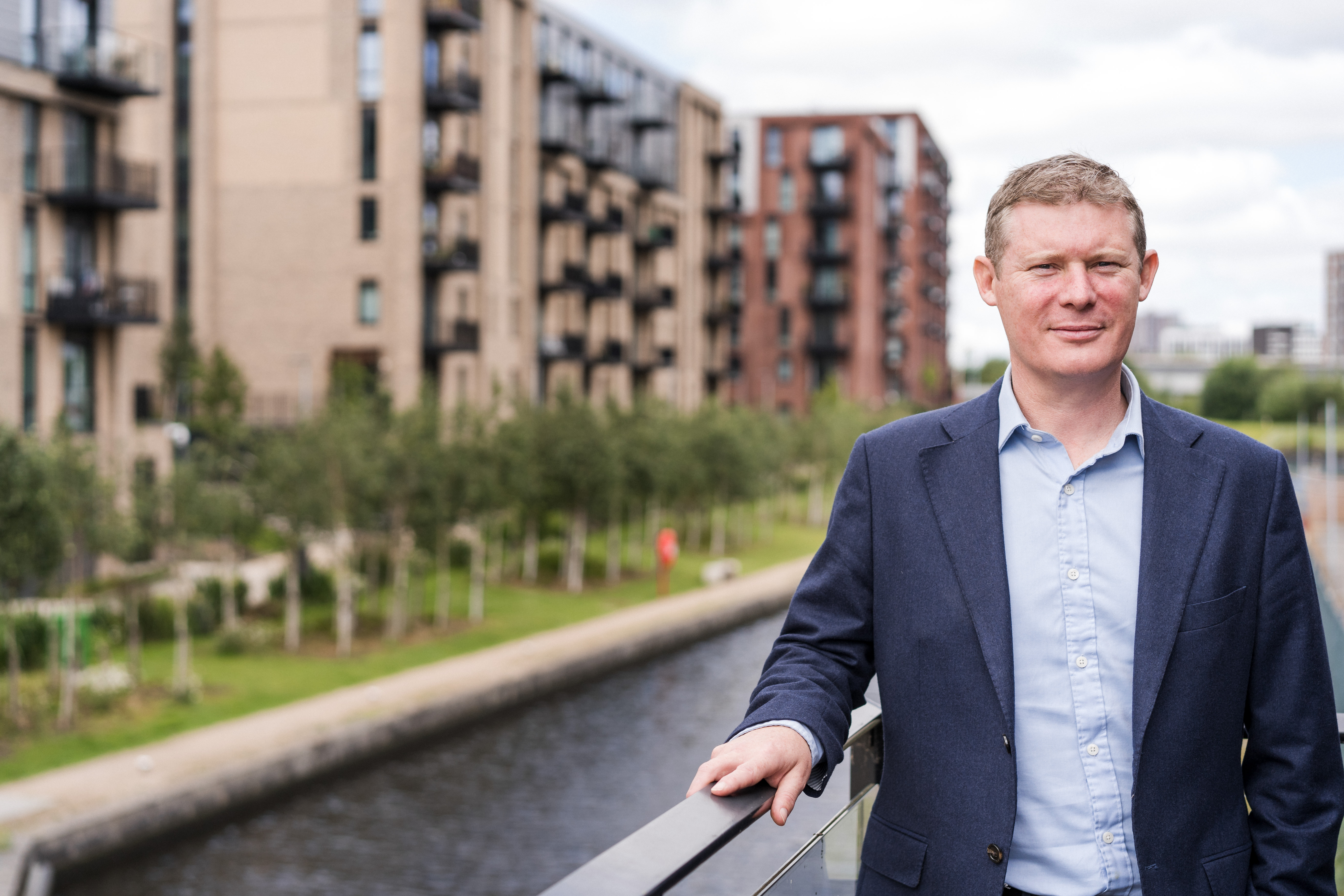
By Paul Kelly, Group Managing Director, Scarborough Group International
The UK property industry has never been short of ambition. Every conference, every policy paper and every government announcement reinforces the importance of delivering more homes, regenerating our towns and cities and attracting private investment into places that need it most. The intention is there, the demand certainly exists and there is no shortage of institutional capital looking for opportunities in the Living sector.
Yet despite all of that, the gap between housing need and housing delivery remains stubbornly wide.
That tells us something important. The challenge facing the industry today is no longer convincing people that we need more homes or attracting investors into residential property. It is creating projects that are capable of moving from aspiration to delivery in an environment that has become significantly more complex than it was even five years ago.
Construction costs have risen sharply, while the Building Safety Act has introduced a more rigorous regulatory framework that rightly places greater emphasis on accountability and demonstrating compliance throughout the design and delivery process. It has also added time, cost and complexity to bringing forward residential development. Infrastructure costs continue to increase, planning and utility connections often take longer than anticipated, and procurement has become more challenging. None of these changes are inherently negative. They are helping to raise standards across the industry. Collectively, however, they have made the delivery of major regeneration projects significantly more complex and, in doing so, have changed what investors look for when assessing delivery risk.
Increasingly, investment committees are asking questions that extend well beyond planning consent and projected returns. They want to understand whether the infrastructure is deliverable, whether there is genuine public sector commitment, whether the delivery team has navigated projects of comparable complexity before and whether the partnership around the table has the resilience to see a project through changing market conditions.
In other words, confidence has become one of the most valuable assets a scheme can offer.
Residential remains one of the most attractive long term investment sectors in the UK. Demographic trends continue to support demand, particularly in cities with strong employment growth, expanding knowledge economies and a growing population. Manchester is perhaps the clearest example of that. Its ability to attract businesses, graduates and investment has been well documented, while independent research continues to highlight the city's long term economic strength and the resilience of its rental market.
What has changed is not the attractiveness of residential as an asset class. It is the way projects are assessed.
There was a time when securing planning permission was seen as the principal milestone. Once consent had been achieved, the assumption was often that delivery would naturally follow. Today's market is rather different. Investors recognise that planning is only one stage in what has become a far more complex process, and increasingly they are looking for evidence that the difficult work has already begun.
That means understanding how infrastructure will be funded, how viability will be maintained, whether enabling works are progressing, how public bodies are supporting delivery and whether the people behind the project have demonstrated the patience and experience needed to navigate inevitable challenges over what may be a decade or more.
The market has not become more cautious. It has become more discerning, and that distinction matters because it changes where value is created.
One of the biggest lessons we have learned over the past decade is that successful regeneration has very little to do with one organisation getting everything its own way. Quite the opposite. The most successful projects are usually those where every partner understands that achieving the best outcome requires compromise, trust and a shared commitment to the long term.
Public private partnerships have often been spoken about as though they are simply another delivery mechanism or funding structure. In reality, they are much more fundamental than that. They create alignment between organisations with different responsibilities but a common objective, allowing decisions to be made with confidence even when market conditions become more challenging.
That has certainly been our experience working alongside Salford City Council and the National Housing Bank, Homes England, at our Middlewood Locks scheme.
Over more than a decade, we have worked together through changing governments, different economic cycles, rising construction costs and an evolving regulatory landscape. There have been difficult decisions, robust conversations and occasions where plans have needed to adapt to changing circumstances, but the partnership has remained focused on the same objective of creating a successful neighbourhood that delivers long term value for residents, businesses and the city.
That continuity is far more valuable than it perhaps appears from the outside. It creates certainty, not because challenges disappear, but because everyone involved is committed to solving them together.
National Housing Bank, Homes England, has changed the conversation
One organisation that deserves particular recognition is the National Housing Bank, Homes England.
Throughout our experience, Homes England has consistently demonstrated what effective public sector partnership should look like. It understands commercial realities, recognises that regeneration rarely follows a straight line and is focused on helping projects move forward rather than simply administering funding programmes. That practical approach has made a real difference, particularly at a time when many schemes across the country have struggled to maintain momentum.
The creation of the National Housing Bank builds on that philosophy. It recognises that increasing housing delivery requires more than planning reform or ambitious targets. Infrastructure, enabling works and patient capital all have an equally important role to play in creating the confidence that allows long term private investment to follow.
From our perspective, that is an important evolution in the way government supports regeneration. It reflects an understanding that successful development depends not simply on policy, but on partnership.
When we first became involved at Middlewood Locks, the opportunity was obvious. A strategically important brownfield site sitting between Manchester and Salford had the potential to become one of the North West's most significant new neighbourhoods. Realising that vision, however, required far more than a masterplan and planning permission.
It required sustained investment in infrastructure, long term collaboration between the public and private sectors and a willingness to continue investing through changing market conditions. It also required recognising that regeneration is measured over decades rather than development cycles.
Today, Middlewood Locks is home to more than 2,600 residents, with over 1,300 homes delivered alongside commercial space, public realm and new connections that have transformed the way this part of the city functions. Those outcomes are important, but they are not the achievement in themselves.
The real achievement is that the partnership has continued to deliver despite operating through one of the most challenging periods the industry has experienced in recent memory.
The continued support of the National Housing Bank, Homes England, is another important step in that journey, demonstrating confidence in a wider partnership that includes Salford City Council and has consistently delivered over the long term.
There will always be debate about planning reform, viability, regulation and housing targets. Those discussions are important because they shape the environment in which we all operate. However, they should not distract us from a much simpler truth.
Successful regeneration has always been built on relationships.
The projects that will attract long term investment over the next decade are unlikely to be those with the boldest visions or the most ambitious computer generated images. They will be the schemes that demonstrate they can deliver, that have earned the confidence of their public sector partners and that continue to create value long after the first phase has completed.
As a family owned business in our 50th anniversary year, we have always believed that our reputation is built over generations rather than market cycles. That naturally influences the way we think about development. We are interested in creating places that continue to evolve, attract investment and support thriving communities long after construction has finished because those are the places that ultimately deliver the strongest long term returns.
Looking back over the past ten years, perhaps the biggest lesson Middlewood Locks has taught us is that regeneration is no longer simply about assembling land, securing planning and finding funding. Those things remain important, but they are no longer enough on their own.
The projects that succeed will be those where public bodies, private developers and long term investors work together with a shared commitment to delivery, recognising that confidence is earned over many years and that successful partnerships create value that no organisation could achieve alone.
That, in my view, is what modern regeneration looks like, and why partnership has become one of the most valuable forms of capital our industry has.