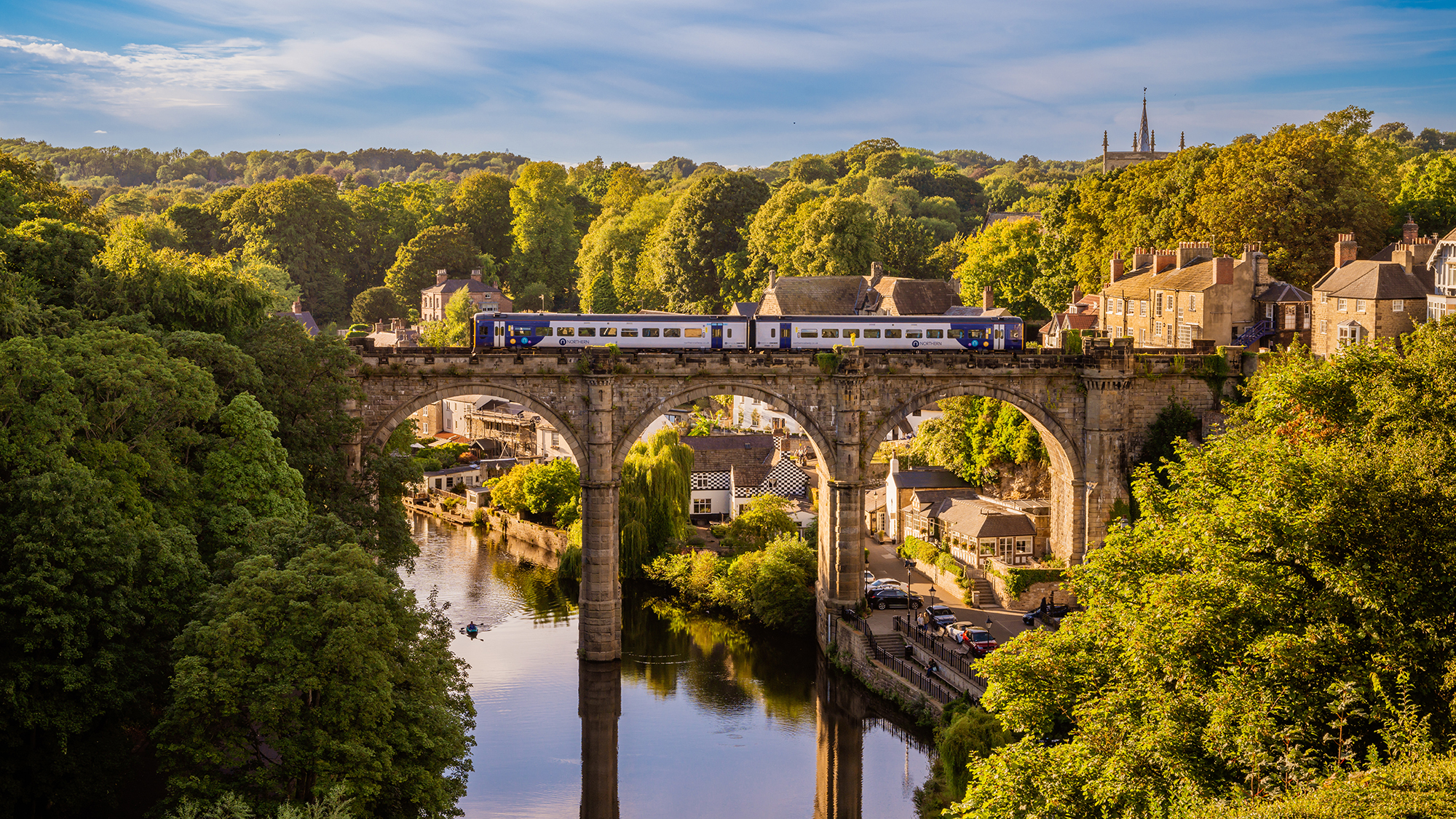
In North Yorkshire, as in many rural and semi-rural regions, a delicate balance is constantly being negotiated between growth and preservation. On one hand, the county faces urgent needs – more housing, better infrastructure, economic resilience and climate action. On the other, it holds a deep-rooted sense of place – landscapes, villages and identities that generations have shaped and cherished.
Yet when talk turns to development, the conversation often narrows to numbers. How many homes? How much land? How fast can we build? These are necessary questions – but they miss the deeper issue. The real question is: what kind of growth do we want – and who is it for?
This is where the idea of ‘strategic growth’ becomes so important. This isn’t a throwaway technical term used in planning; rather it’s a mindset for delivering homes, employment, healthcare and education, in a way that prioritises quality, coherence and long-term value. Strategic growth is about placing development in the right locations, with the right infrastructure, at the right scale. It means building places – not just projects.
North Yorkshire Council now has a rare opportunity to shape that kind of future. As a newly-formed unitary authority preparing a new Local Plan, it can step back from past patterns and think boldly about the next generation of communities.
Because the truth is, much of the region’s recent development has been piecemeal and reactive -small housing estates on the edge of villages, or infill schemes disconnected from services and infrastructure. Growth that happens to places rather than with them. This concern is recognised in the Council’s Issues and Options Consultation, which highlights the limitations of “dispersed smaller sites which may not support services or public transport effectively,” and acknowledges that such patterns “can make it harder to secure infrastructure or contribute to sustainable patterns of growth”[1]. Communities, too, have voiced frustration that development can feel imposed rather than inclusive – calling for growth that genuinely supports local needs and values.
Strategic growth offers a different path. Instead of dispersing development across dozens of isolated sites, it focuses on creating well-planned locations where housing, jobs, transport, schools, healthcare and green space are delivered together. Places that are designed as communities – not just as numbers on a spreadsheet.
This is not just a theoretical ambition. We’ve already seen what it can look like – and we’ve seen it succeed.
Twenty-five years ago, a 300-acre site on the edge of Leeds was just farmland. Today, it’s Thorpe Park Leeds – one of the region’s most successful mixed-use destinations. Over 7,500 people now work there, across 1.4 million square feet of offices, retail and leisure space, 300 homes delivered by Redrow and 150 acres of public realm. But the story is not just one of economic growth. It’s one of planning vision.
Originally conceived in the 1990s as a conventional out-of-town business park, Thorpe Park Leeds underwent a transformational shift in 2010, when we reimagined it as a mixed-use community with placemaking, infrastructure and sustainable growth at its core.
Early investment in connectivity – including a new bridge over the TransPennine Railway, carrying the link road that enabled the construction of the East Leeds Orbital Route – helped unlock not just the site itself, but the broader East Leeds Extension, one of the city’s largest residential expansion zones.
The addition of The Springs, a vibrant retail and leisure centre, and landmark offices such as Paradigm, Lumina and No. 1 The Square, further demonstrate how strategic planning can deliver far more than just floorspace. The future plans for Thorpe Park’s next chapter include an industrial and logistics hub, exceptional education facilities, health and leisure space, and up to 450 new apartments – adding homes across a range of tenures to the jobs and amenities already in place.
Thorpe Park shows what becomes possible when growth is coordinated, infrastructure is prioritised, and placemaking is taken seriously from the start.
This is the power of strategic growth. It enables local authorities and developers to plan and deliver infrastructure at scale – not retrofitted in response to pressure, but embedded from the outset. It supports the creation of places where people can live, work, learn and thrive with a lower environmental footprint. Where green spaces, active travel routes and public transport are integral to the design – not added under strain, but considered as essential components of place. This approach also complements well-planned expansion of existing settlements, particularly where local services can accommodate growth or be upgraded as part of a coordinated plan.
It also offers a smarter way to meet climate goals. North Yorkshire has committed to becoming the UK’s first carbon-negative region. That target won’t be met through scattered, car-dependent growth. It will need new communities designed for sustainability – places where walking and cycling are viable, where homes are energy-efficient by default and where local employment options reduce the need to commute long distances.
And perhaps, most importantly, strategic growth takes pressure off places that are already under strain. By focusing development in the right locations, we can better protect rural character, avoid overloading small villages, and channel investment where it can have the biggest impact.
Of course, strategic growth is not just about big plans and grand visions. It only works if it’s shaped with communities, not in isolation from them. People want to understand how new development will support their quality of life, their children’s opportunities, their sense of place. They want to be part of the conversation – and they should be.
North Yorkshire’s Local Plan process is a once-in-a-generation opportunity to lead this conversation. To move beyond the politics of housing numbers and towards a shared vision for the kind of places we want to create.
Because growth can work for everyone, and is essential for the long term wellbeing. The real choice is whether we shape it – or let it shape us.