By Adam Varley, Development Director, Scarborough Group International
The way people connect with places is changing. Out of town business parks, once defined by dual carriageways and expansive car parks, are being reimagined as vibrant, multi-modal destinations where sustainability and accessibility extend beyond the development of real estate. At Scarborough Group International (SGI), we believe this transformation is fundamental to building the resilient, attractive mixed-use communities of the future.
Thorpe Park Leeds, our flagship mixed-use development, provides a compelling case study. Over the last two decades, we have invested heavily in infrastructure and partnerships to make it one of the best-connected and most sustainable business park environments in the North of England. Today, it stands as proof that out of town does not have to mean out of reach.
Accessibility has always been a deciding factor in whether a business park thrives, but in 2025, the definition of accessibility goes far beyond motorway junctions. Employers are under pressure to demonstrate environmental responsibility and offer workplaces that support wellbeing, while staff want real choices in how they travel. The combination of rising ESG expectations, the cost of living, and the realities of hybrid working mean that connectivity is now both a practical necessity and a marker of long-term value.
At Thorpe Park, that thinking has been hardwired into the design and delivery of the place. Its strategic location at Junction 46 of the M1 and the completion of the East Leeds Orbital Route (ELOR) provides excellent road access into Leeds and the wider region beyond the city, but the real difference lies in the range of alternatives we have prioritised.
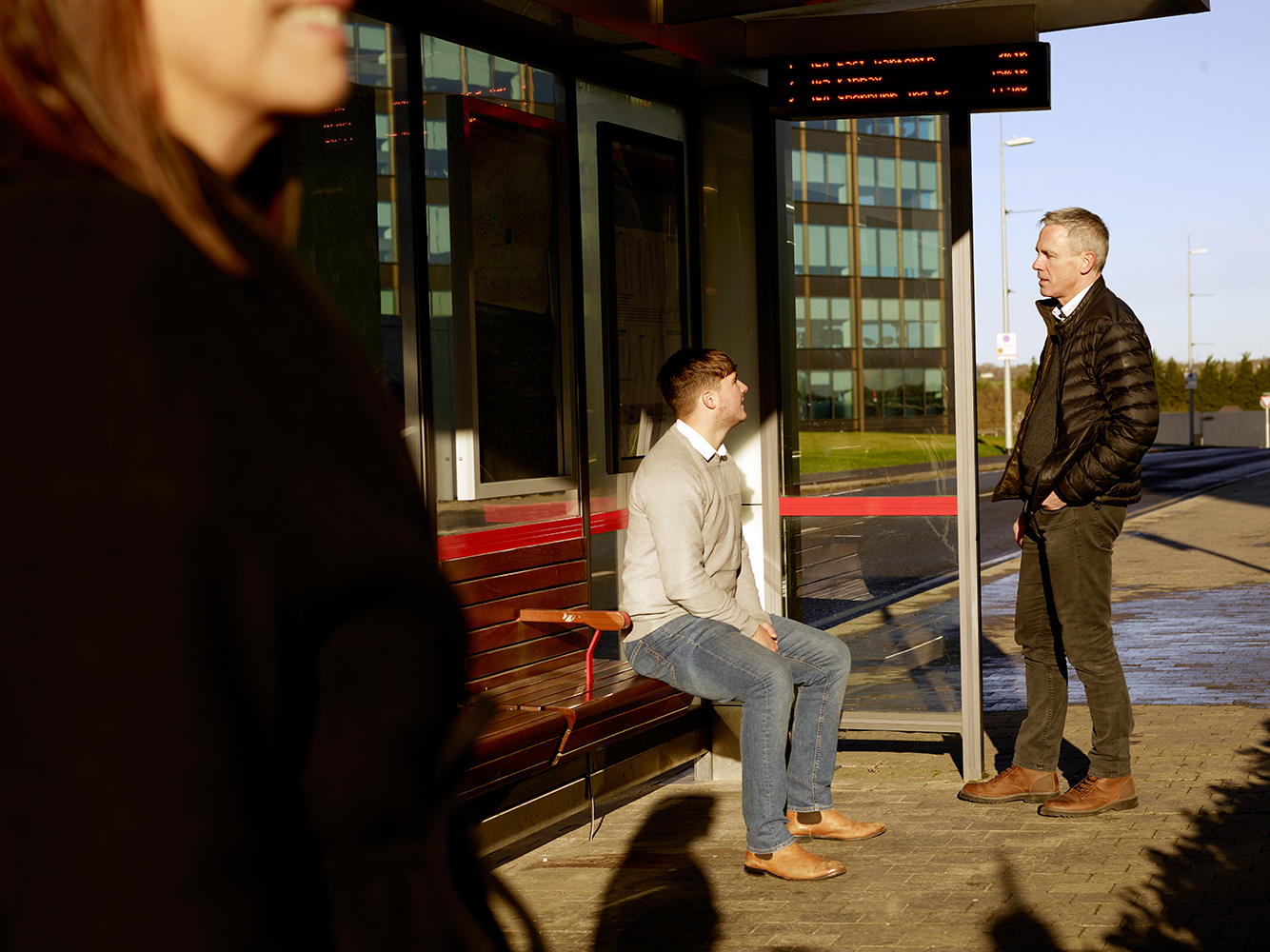
One of the most notable successes has been the introduction and expansion of the 164 and 165 bus services, operated by Arriva Yorkshire. When they were first launched, with initial developer subsidy, they filled a crucial gap in linking surrounding communities with the park. Since then, passenger numbers have grown dramatically, rising by around 45% between 2023 and 2024, and a further 20% year-on-year in 2025, with March alone recording a 28% increase. Those figures are remarkable at a time when the wider bus industry continues to face many challenges, but it shows that when services are reliable, convenient and well-promoted, people will choose them. This is why we continue to work with Arriva to support the services as a sustainable and, in some cases, essential form of transport for communities with few or no alternatives.
Alongside buses, Thorpe Park has steadily strengthened its walking and cycling credentials. The National Cycle Network Route 66 runs directly through the site, while an expanding web of local cycleways and traffic-free routes connect the park to nearby communities such as Colton, Garforth and Seacroft. Further connections are planned as part of Integral – the proposed Industrial and Logistics Hub at Thorpe Park – which will enhance access for neighbouring communities. As a result, walking and cycling are not just aspirational or ad-hoc choices but realistic, everyday options for many of the 7,500 people now working on-site.
Perhaps the most transformative addition to Thorpe Park’s transport mix will be the new railway station being progressed by West Yorkshire Combined Authority and Network Rail within the development. Backed by public sector funding as part of a wider programme of regional rail improvements, the station will place Leeds city centre just eight minutes away and significantly extend Thorpe Park’s commuter catchment to those communities located along the route it serves. Just as importantly, it will connect nearby communities, including new neighbourhoods along the ELOR, directly to the city centre. For thousands of employees and visitors, rail has the potential to become the most convenient and sustainable option, cementing Thorpe Park’s position as a truly integrated business and leisure destination.
This layered approach to connectivity has recently been formalised in our new five-year Sustainable Transport Plan, developed with TPS Transport Consultants. The plan sets an ambitious target of reducing single-occupancy car travel by at least 10% by 2029.
It builds on a strong foundation: a recent survey found that around 40% of people working at Thorpe Park already commute by sustainable means, whether by bus, train, bike, foot or car sharing. That figure is striking for an out of town location and demonstrates what is possible when a long-term commitment is made to travel planning, infrastructure and supporting behavioural change.
To accelerate progress, the plan outlines measures ranging from improved cycling facilities and electric vehicle infrastructure to bespoke Travel Plans for occupiers and car park management strategies. It also extends our ParkLife platform, which supports employees with everything from free bike maintenance and journey planning to discounts on sustainable travel. The emphasis is on collaboration – developers, businesses and transport providers working together to embed change rather than treat it as an afterthought.
The results matter for more than just transport. By broadening access beyond the car, Thorpe Park creates opportunities for people who might otherwise be excluded, supporting inclusive economic growth. By cutting congestion and carbon emissions, it aligns with the city’s climate ambitions and enhances wellbeing for the community as a whole. And by offering employers demonstrable sustainability credentials and access to a wider talent pool, it strengthens the park’s commercial resilience in a competitive market.
Looking ahead, the continued success of the 164 and 165 bus services to the south of the Park, the growth of active travel supported by high-quality end-of-journey facilities, and the arrival of the new rail station all signal a future where out-of-town no longer means out of touch. Thorpe Park Leeds demonstrates that business parks can adapt to changing expectations while leading the way in sustainable connectivity.
For Scarborough Group, this is not just about transport – it is about place-making, community and long-term value. Connectivity is no longer an add-on; it is the defining feature of a thriving, future-ready destination.